About
News Room is a free digest of underwater news: scuba and freediving, dive medicine and safety, wrecks and underwater archaeology, ocean science, equipment, recalls, film and photography.
Every entry starts at a primary or specialist source: journals, research institutes, safety agencies and the dive press. A local AI model drafts a short abstract and the key points; the editor checks each one against the original before it is published. The point is to help you find the stories worth your time, then send you to the people who reported them.
The editor
Carlos Lander. Technical diving instructor, historian, and researcher with over 25 years of experience in technical and public safety diving. Archaeology aficionado.
Books by the editor

Lights and Shadows Over the Caribbean Waters During WWII
This non-fiction narrative uncovers the forgotten World War II naval battles fought in the Caribbean. Journey back to a time when German U-boats, under the command of the ambitious Admiral Dönitz, launched a surprise offensive against the Allies' most vital oil and bauxite supply lines. The book chronicles the dramatic attacks, internal strategic disputes, and the surprising humanity found amidst the chaos, separating documented history from the enduring local myths that still haunt the region today. The story is primarily set in the Caribbean Sea during World War II, from 1939 to 1945. Key locations include the strategic oil refineries of Aruba and Curaçao, the bauxite shipping lanes from Suriname, the waters off the Venezuelan coast, and the French island of Martinique under the Vichy regime. The narrative also shifts to German U-boat bases in occupied France, military command centers in Germany and the United States, and the wider North Atlantic. The setting is tropical waters turned into a deadly hunting ground, where naval convoys face off against wolfpacks in a high-stakes battle for control of vital resources.
Get the book
Scuba Diving Logbook
Recreational and TechRec Scuba Diving Logbook. Includes the diving accident management flowchart and the neurological examination field test. Ample space for Decompression Schedule: Depth, Run Time, Mixes, PO2, CNS%, and Gas needed. Each dive log includes a page for a site map or dive profile, with notes and observations.
Get the book
BEYOND THE DIVING COURSE: A CURATED COLLECTION OF ARTICLES FOR THE DIVING ENTHUSIAST
Déjà vu. Another scuba diving book? Well, not precisely. This booklet series is a curated collection of articles from various fields of knowledge in the diving industry. You will learn about unusual topics not frequently discussed in diving courses and, occasionally, my thoughts. This book offers current information; each article presents a problem, a practical solution, and sometimes an emotional response. This "scuba" booklet takes a different approach from other scuba diving books because I want the reader to apply what they learn and put it into practice, not just theory; you will find every piece of data explained with tips on how to apply it. For example, what scuba equipment repairs can you do in the field without compromising safety? Another example is understanding statistics and how to apply them to your planning. You'll also read about marine ecosystems, history, interviews, and economics, which are also very interesting. Dive into the first issue of Beyond the Diving Course, the ultimate booklet for scuba diving enthusiasts! Whether you are a seasoned diver or just getting your fins wet, this is your go-to source for scuba diving outside the classroom. This issue introduces scuba diving and its equipment.
Get the book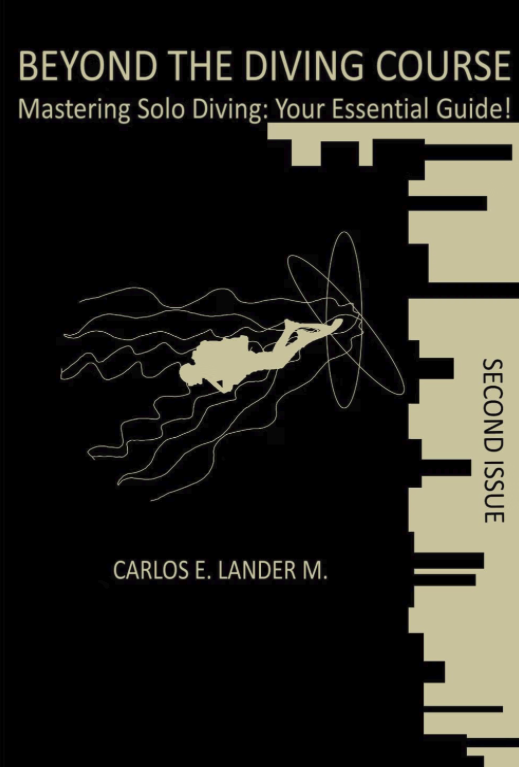
Mastering Solo Diving: Your Essential Guide!
What specific training do solo divers need to stay safe? What percentage of diving accidents involve solo divers compared to group divers? What measures can divers take to prevent incidents related to decompression illness? Many diving instructors believe most diving fatalities occur because of lack of focus, overconfidence, and negligence. Most accidents happen at the surface but originate at depth. Decompression illness (DCI) symptoms become noticeable on the surface and are often linked to rapid ascents caused by air supply issues or equipment failure. Many accidents involve divers isolated; however, the statistics do not differentiate between being separated from the group and diving alone, making it difficult to determine the percentage of solo divers. Another report complication is the need for more information about whether the diver had received training and was qualified to dive solo. In any case, dive into this subject, but be aware that Solo diving is NOT FOR THE FAINT-HEARTED. Discover the answers to these questions and more in this exciting new book; come along and join the adventure!
Get the bookThe weekly newsletter
Once a week the editor picks the stories that matter most and adds his notes in Beyond the Diving Course on Substack. It is free.
Advertise
Sponsor placements sit beside the stories readers come for and can be matched to a theme, such as technical diving, equipment or underwater archaeology. Each month you receive a report with impressions and clicks per placement. Write to [email protected].
Privacy
This site sets no cookies and loads nothing from other companies. It counts page views and clicks on links and sponsor placements anonymously: no personal data, no IP addresses. Videos are the one exception, and only if you choose: nothing loads from YouTube until you press play, and then it plays in YouTube's privacy-enhanced mode.